Average Reviews:

(More customer reviews)Along with starting my residency, I also started receiving about 10 monthly journals that I never subscribed to. I'm not sure if they get names from the programs or through the match. At first I was into it, made me feel like a real doctor. But it was way too much to read. I didn't want to throw them out. Soon, towers of unread journals began to take over my space, symbols of unprofessional indolence, guilt-inducing.
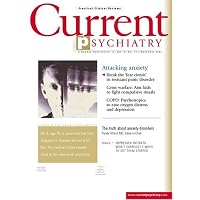
So I asked around. Some people just chuck them all. A nice tip I got, something that feels right, is to pick one or two journals and read them. That way, you're staying on top of the literature but you are giving yourself a realistic goal, not setting yourself up for failure. I haven't settled on which ones yet, but I've been reading Current Psychiatry lately.
I call it the USA Today of psychiatric journals because it's pretty light stuff. I like it because I can skim through it on train before I've had my morning coffee. I might learn something, might not, but it requires very little EEG activity. It's of course chock full of the hideous, gaudy drug advertising that I suppose comes with the territory in a journal that I never asked to get in the first place. But there are some interesting articles. For example, this latest issue, July '06 has, among other articles, an evidence-based reviews of modifying antidepressants with thyroid hormone, a discussion on when compulsive shopping becomes pathological, and an interesting discussion on sexual dysfunction and the meaning of love. Then they have the "Cases that test your skills" section, the equivalent of the old "Think-and-Do Page" from your childhood scholastic pamphlets. A case is presented as it unfolds, with periodic multiple choices to test your diagnostic skill. There is good information, but in a very non-challenging format, complete with "Bottom Line" boxes, not un-like the USA Today famous pie graphs, (example from the this month: "Bottom Line: Recognizing catatonia early can help prevent medical complications and - in extreme cases- distinguish the disorder from neuroleptic malignant syndrome. Consider electroconvulsive therapy for treating depression with catatonic features." Noted.) The Pearls section has little tips on dealing with challenging situations, such as this months "7 steps to a successful antipsychotic switch" and "`Prescribing' behavioral and lifestyle changes," where a clinician tells us how he writes out non-medical advice on the prescription pad, like practicing relaxation exercises, "the prescription pad hold therapeutic power." Not a bad idea.
So I'll go on the record as calling this an okay journal. I thought 3 stars would sound too critical, although 4 is too generous, but sadly they don't do fractions in the Amazon.
It's fluffy at times, but I bet it's a nice treat for those doctors who are long out of their training, not in academia, and not working with a group. They say it can get pretty lonely out there in private practice, and so if a journal like this helps prevent isolated clinicians from drifting into a lonely little island of obsolete practice, then it is performing a service. And it's not a bad subway read.
Click Here to see more reviews about: Current Psychiatry
The mission of Current Psychiatry is to provide psychiatrists with up-to-date advice by leading authorities, emphasizing solutions to common clinical problems.


0 comments:
Post a Comment