Average Reviews:

(More customer reviews)I've read many, many science magazines from "Discovery" and "Scientific American" through professional journals (astronomy and computer science) and I can say without qualification that "New Scientist" is the very best. The quality of writing is high and the articles are cutting-edge science, plus an "Inside Science" in-depth feature (the issue I'm currently reading has a lead-in to its 'Inside Science' article: "They eat stars for breakfast. They flout the laws of physics. But do black holes really exist and what would you see if you fell into one?") The side-texts connected to the article are labelled: "Don't Panic!;" "Spaceman Turns to Spaghetti;" and "Black Hole Factories on Earth. There are illustrations of the evolution of a star into a black hole, "The Tardis Effect," "How the Sky Falls in," and "Signals from a Binary System." There are also references to websites and printed literature for further research.
The writing in "New Scientist" is not as stodgy as in "Scientific American" and not as watered-down as in "Discovery." Plus it comes every week (more or less, since I live in America and it ships from Great Britain). I usually sit down and read it from cover to cover, even the NewScientist Jobs section (which is now taylored for Americans if that's where you happen to live).
If you subscribe to "New Scientist," you are also given access to their online archive of articles.
Two drawbacks: "New Scientist" is rather pricey and many of the jokes are incomprehensibly British.
Click Here to see more reviews about: New Scientist - Us Edition
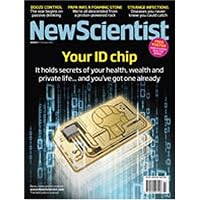
New Scientist reports on the very latest science and technology news, putting discoveries and advances in the context of everyday life.New Scientist relates the advancements of human knowledge to the broader impacts on society and culture, making it essential reading for people who ask why.

Click here for more information about New Scientist - Us Edition

0 comments:
Post a Comment