Average Reviews:

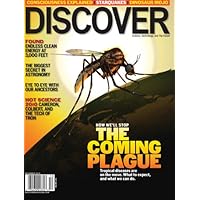
(More customer reviews)As a scientist/educator, I enjoy reading about current science being done in all fields, whether neuroscience or astronomy. We get so specialized in our fields sometimes, we forget about the other sciences which we are not personally involved in. This is one of the better science journals for laypeople who have limited background in most sciences. It's great for me, and I have a large background in most sciences. But so much happens in all areas of scientific endeavor that it is impossible to keep up with. So a magazine like Discover helps to close the gap on my personal ignorance in other areas of science besides neuroscience.
Discover is by the same people running Discovery Channel. Their information is good, they do the research, and they often broach difficult and contrary science concepts which may not be mainstream yet. Their writers and editors do an excellent job. My own personal favorite article each month is Vital Signs, from doctors about medical cases that may be strange or that need to be brought to the attention of the public. I always read that first.
This is a good magazine for high school students to have access to in addition to the regular science textbooks. The type of information given often makes science more accessible for high school students. They can see why someone would choose to go into particular fields of science, and why research is needed.
I do not always agree with the information given. Too many times, it seems that Discover and its editors promote ideas or new medical concepts/technology which has not been proven. As always, lay readers should be sure to get a variety of inputs and information, as well as second opinions before accepting what is said by Discover or any other source. An example of this is the retinal implant spoken about in 2001. Readers should not go asking their physicians about such technology for themselves, but should do as much research as possible prior to making a decision on experimental procedures.
Karen SAdler,
Science Education,
University of Pittsburgh
Click Here to see more reviews about: Discover (2-year)
 Get 75% OFF

0 comments:
Post a Comment